The Growth Yard · the hub · playable · v12
A mall at the edge of the sky.
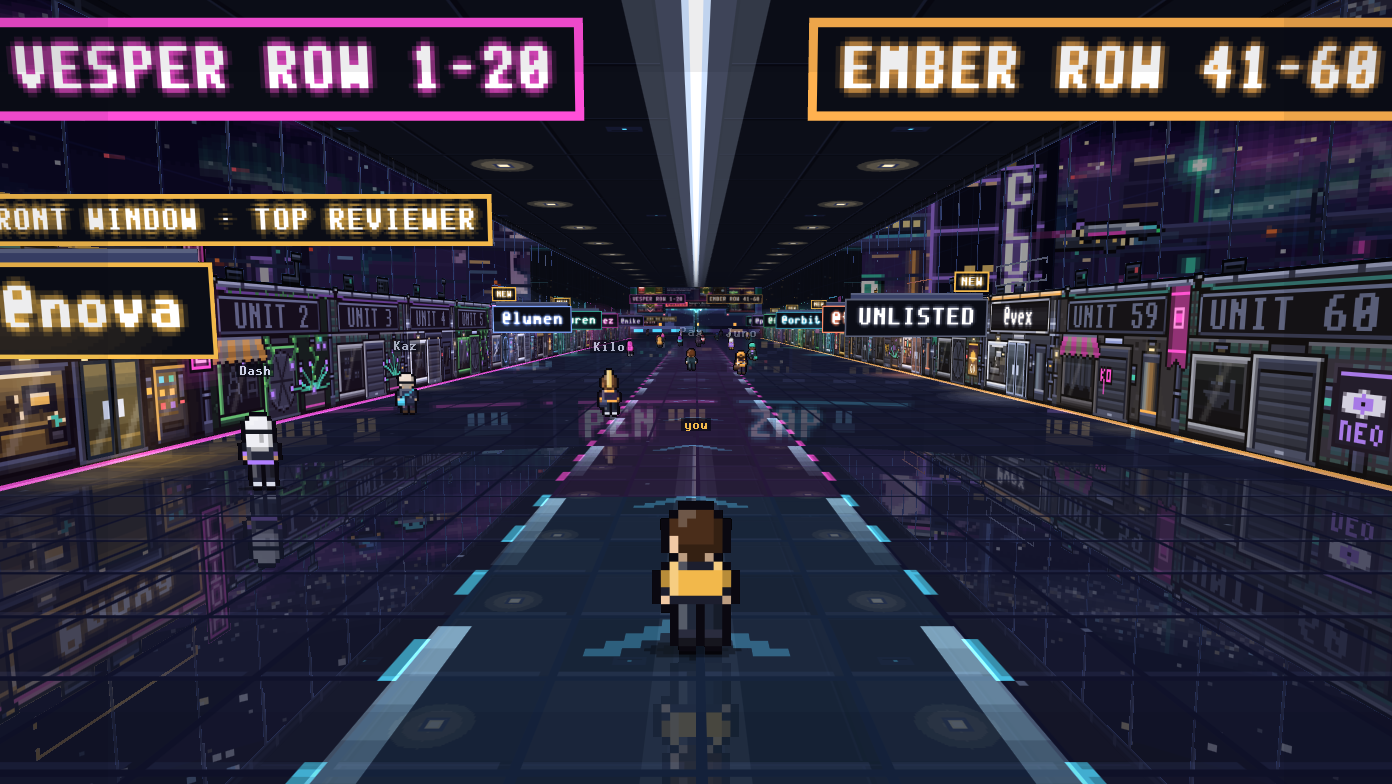
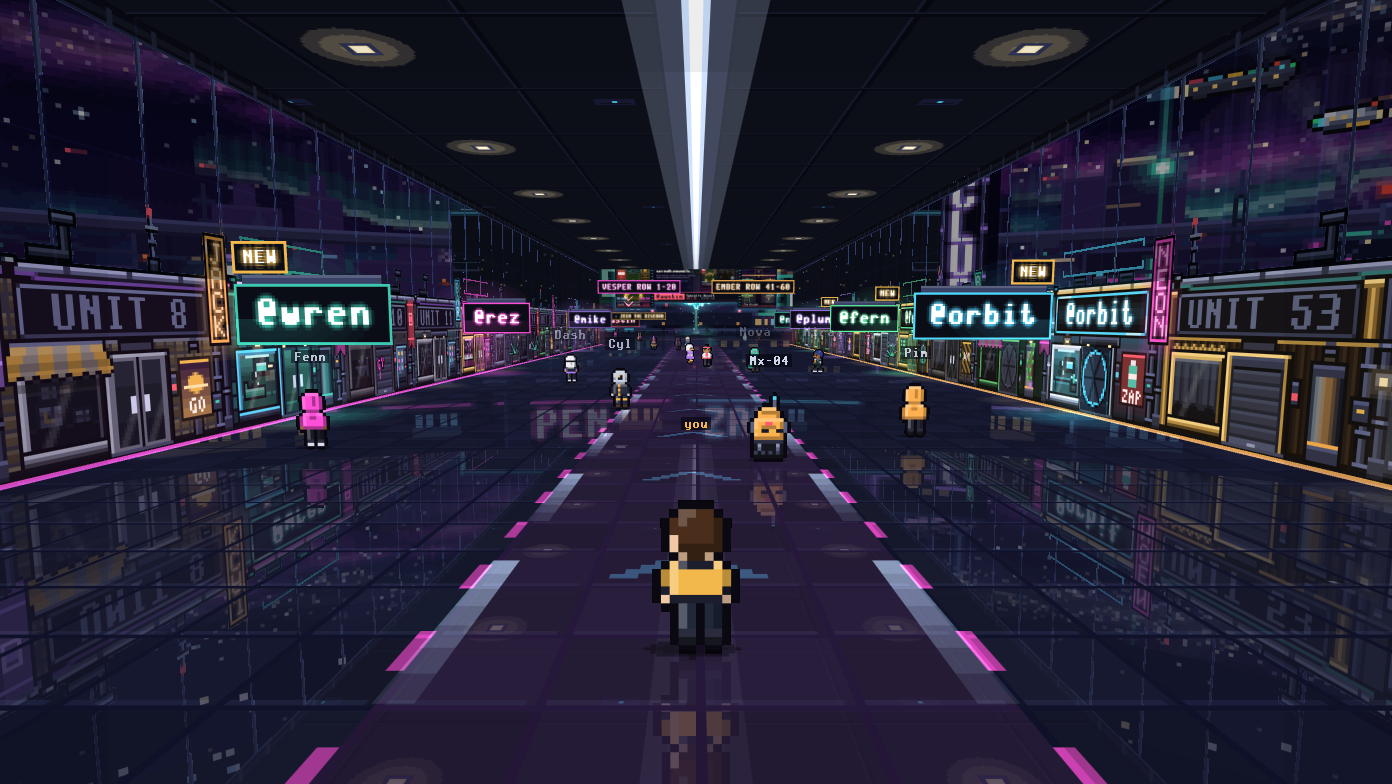
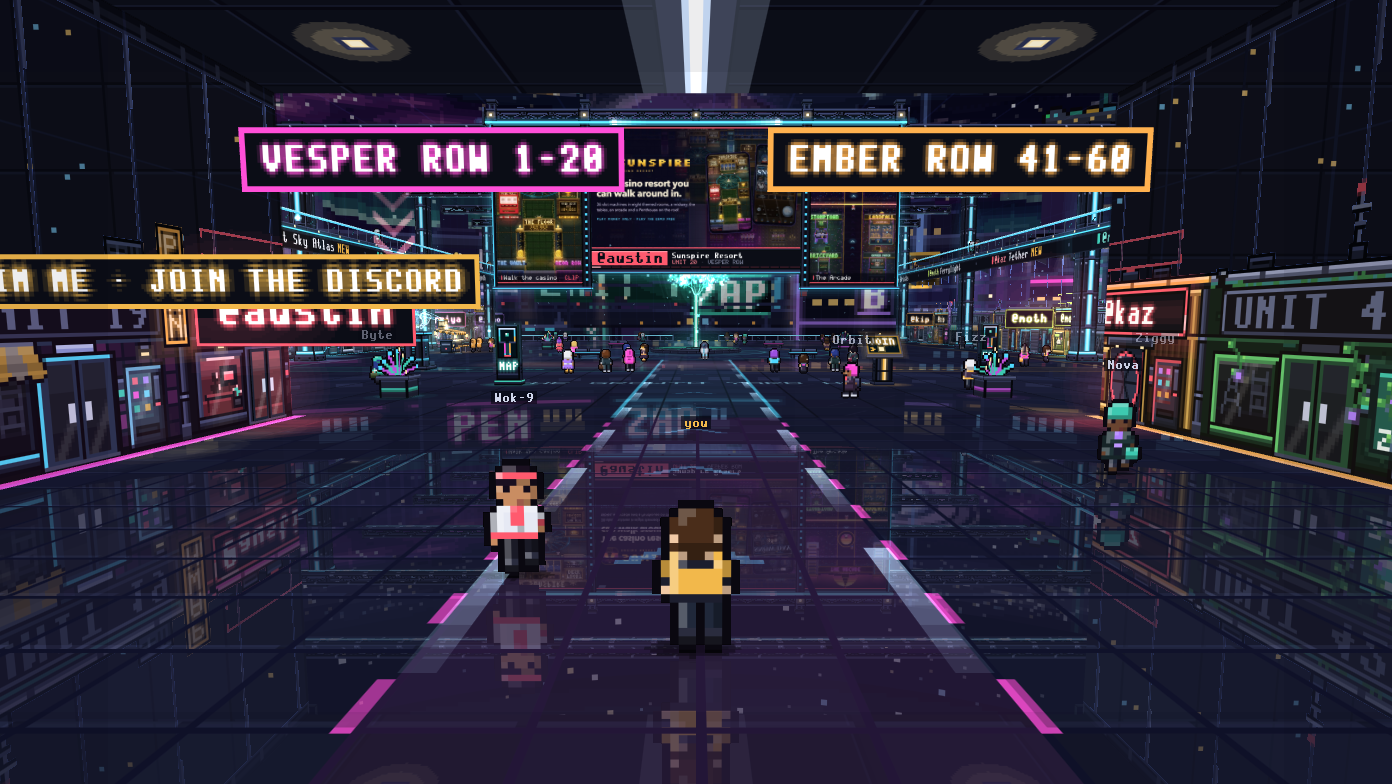
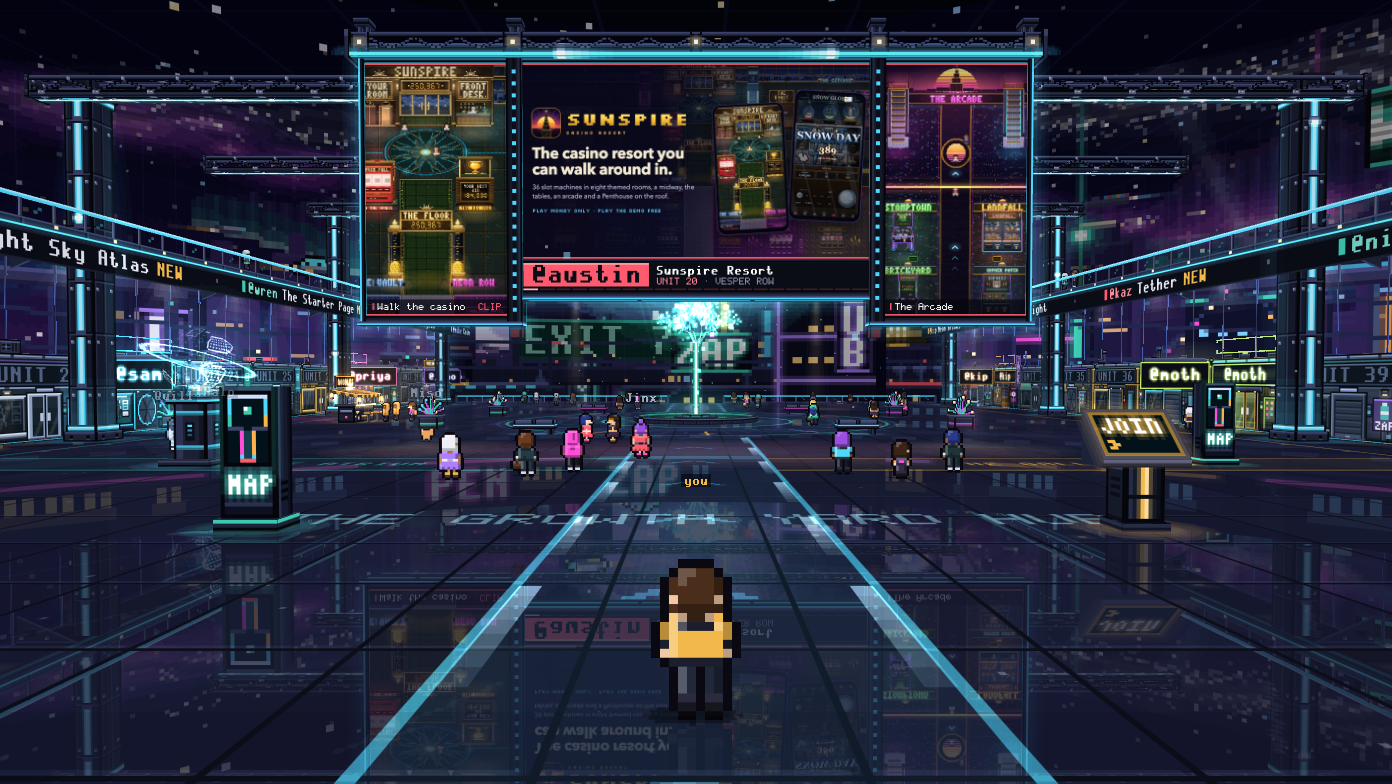
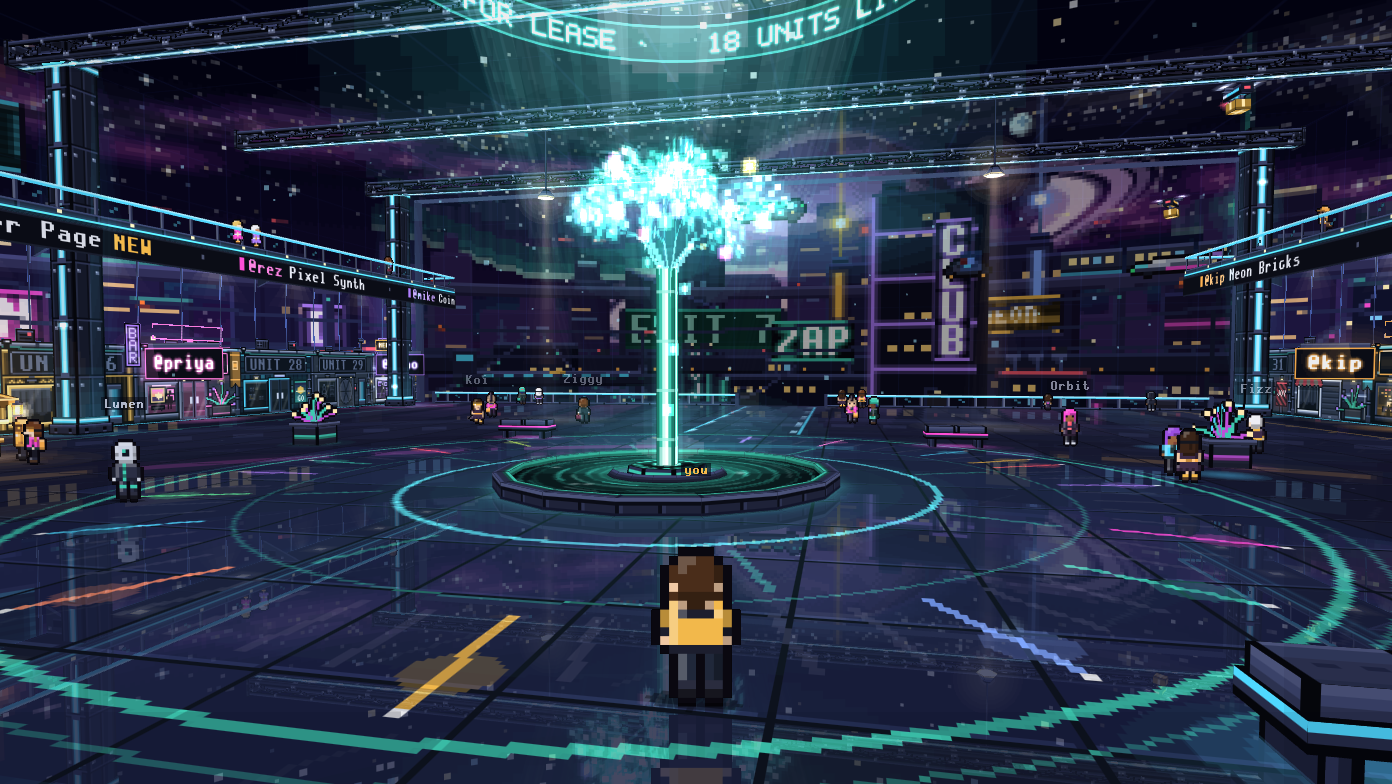
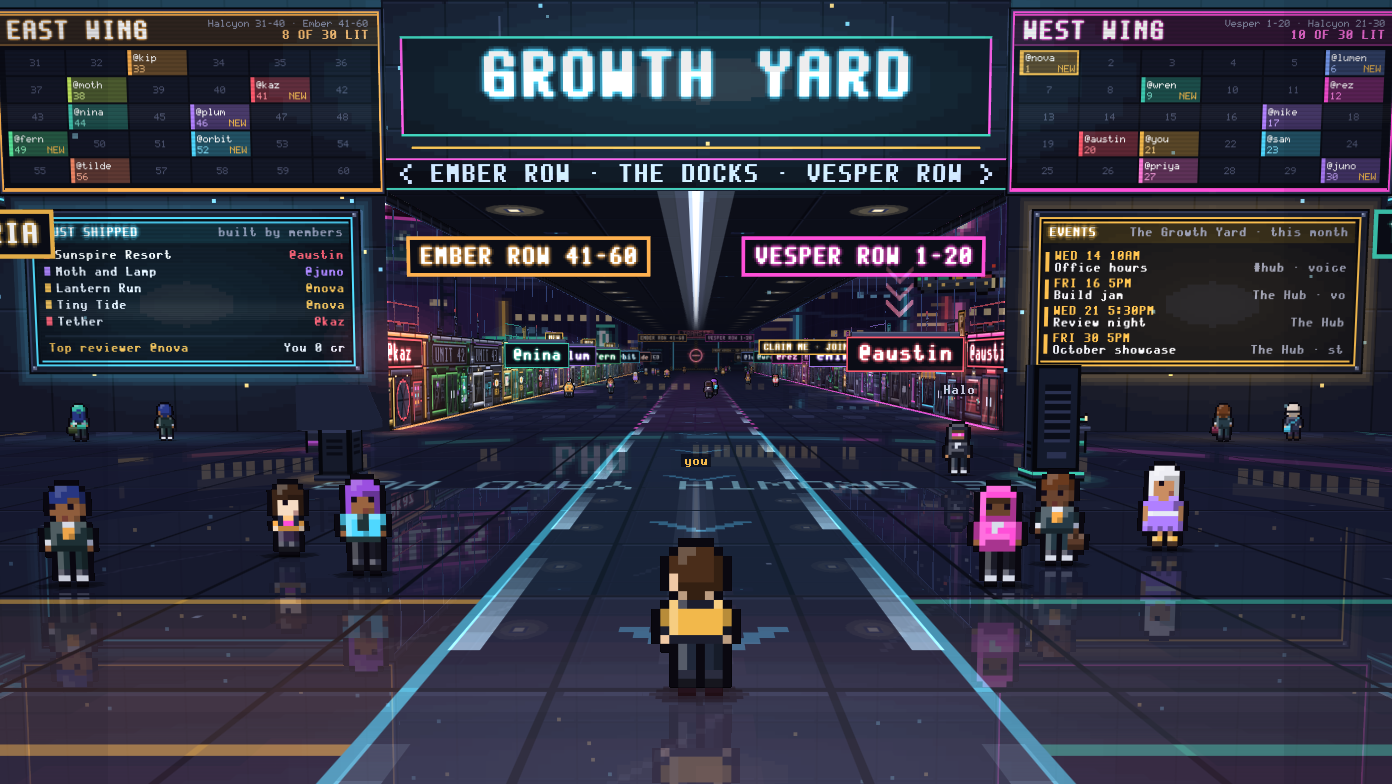
Deck 1 of the Growth Yard concourse, on a planet under a gas giant. You fly in from the docks, down a glass promenade of storefronts, and land at the mouth of the Growth Yard Hub, a grand hall under a vault of trusses and the great window. Three screens hung over the lane cycle through every member: their own clips and stills if they have uploaded any, a card drawn from the registry if they have not. Stand under them and press E to watch at full size and be walked to that member’s door. Anyone can walk it; a unit of your own comes with the Discord. Sixty units; the claimed ones come from a registry file the hub owner edits, and each door opens the member’s own page in a sandboxed frame, or one of twelve built-in demo rooms until real pages exist. The eight two-storey suites lining the Hub are the Court: suite 1 is the owner’s, the rest go to the month’s most active members, and each carries its name in lights and a screen with its member’s own work. Beside every claimed door a guestbook stands on a post: one tap signs it, and the number over it is how many people have. Inside, each game takes its own stamps. One menu holds every member and every game, your yard and your settings; your passport stamp for every book you sign sits on each person; and the front window that goes to the month’s top reviewer. Walk it with W, A and D, drag to look, E at a door or a book, Esc for the menu: the people, the games, your yard and settings. On a phone, one thumb and the Menu button.
What you are looking at
Try this
- Click the stage, hold
Wand walk the promenade until it opens into the Hub. Doors slide open as you pass claimed units; the city is outside the glass the whole way. Escopens the menu: People lists who is here and every member with a door; type a name, pick one, Walk me draws a trail to their door.Eopens it.Eat the book on the post beside a door signs that builder’s guestbook: a stamp is enough. Inside, each game has a card under it for its own stamps.Bis your passport.- In the Hub, stand under the screens and press
E: the clip at full size, the line-up, Play for the member’s game and Walk me to the room. Suite 1, the first door on your left, is the owner’s screening room: its screens play the owner’s game,Eat the big one plays the trailer with sound. The eight suites are the Court; the storefronts on the rows count outward from it. - The ring of panels round the tree is the Hub’s board: what is on, who is here, the new doors, what shipped. Games in the menu has every game on every shelf; Play starts one from there.
⤢plays fullscreen,Phides the HUD for a screenshot. On a phone the left thumb walks and the right thumb looks.
What is real
The world, the walking and the collision. The registry: data/members.json decides who holds which unit and what the door opens, data/events.json fills the board and the ticker. Real units open the member’s URL in an iframe with sandbox="allow-scripts allow-forms", so nothing inside can touch the hub. The directory, search and pods. The twelve demo rooms. The reel: media[] on a member’s row (files in media/, added with tools/add-media.py) plays on the marquee and in their room. The guestbooks, the stamps on each game and your passport work, but what you sign lives in your browser until a backend exists; the notes already in the books are samples.
What is stubbed
Presence (the counter is the walkers), the credits ledger and the monthly re-seating of the Court, Discord login and the /claim-room bot, uploads straight from a Discord channel to the screens, reports to a mod channel. Each is designed with its exact API shape in docs/BACKEND.md; the page already talks to a single adapter, so wiring them is a swap, not a rewrite.
Gallery
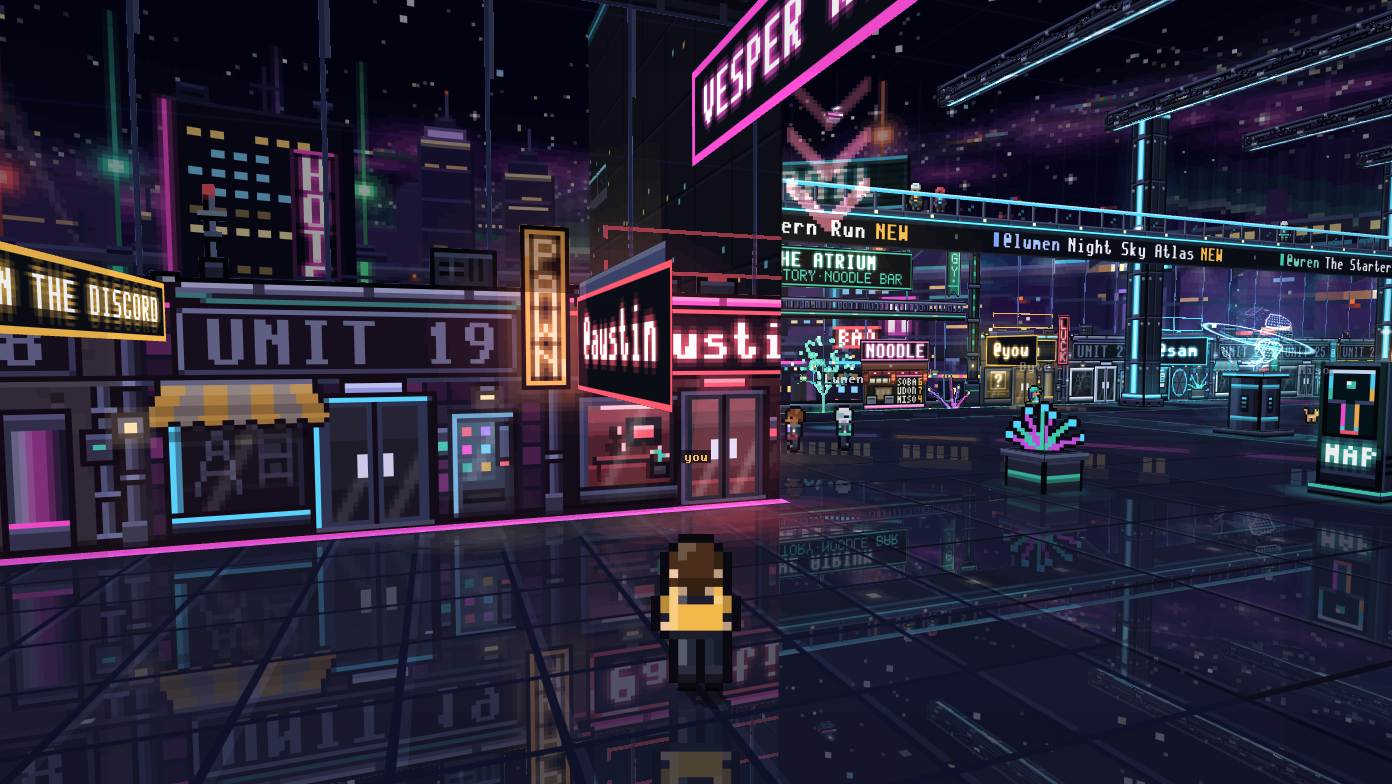
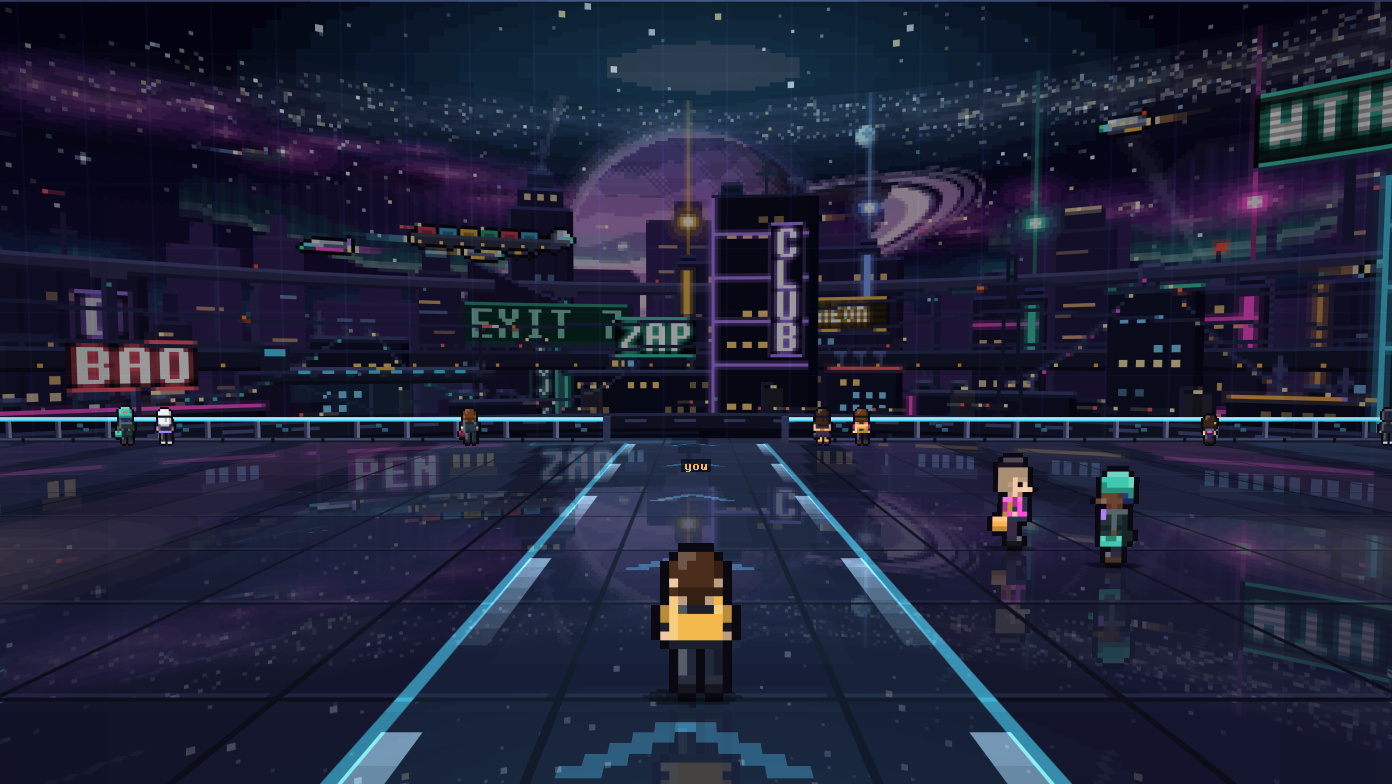
Straight out of the engine, no filters. Click one to open it full size.
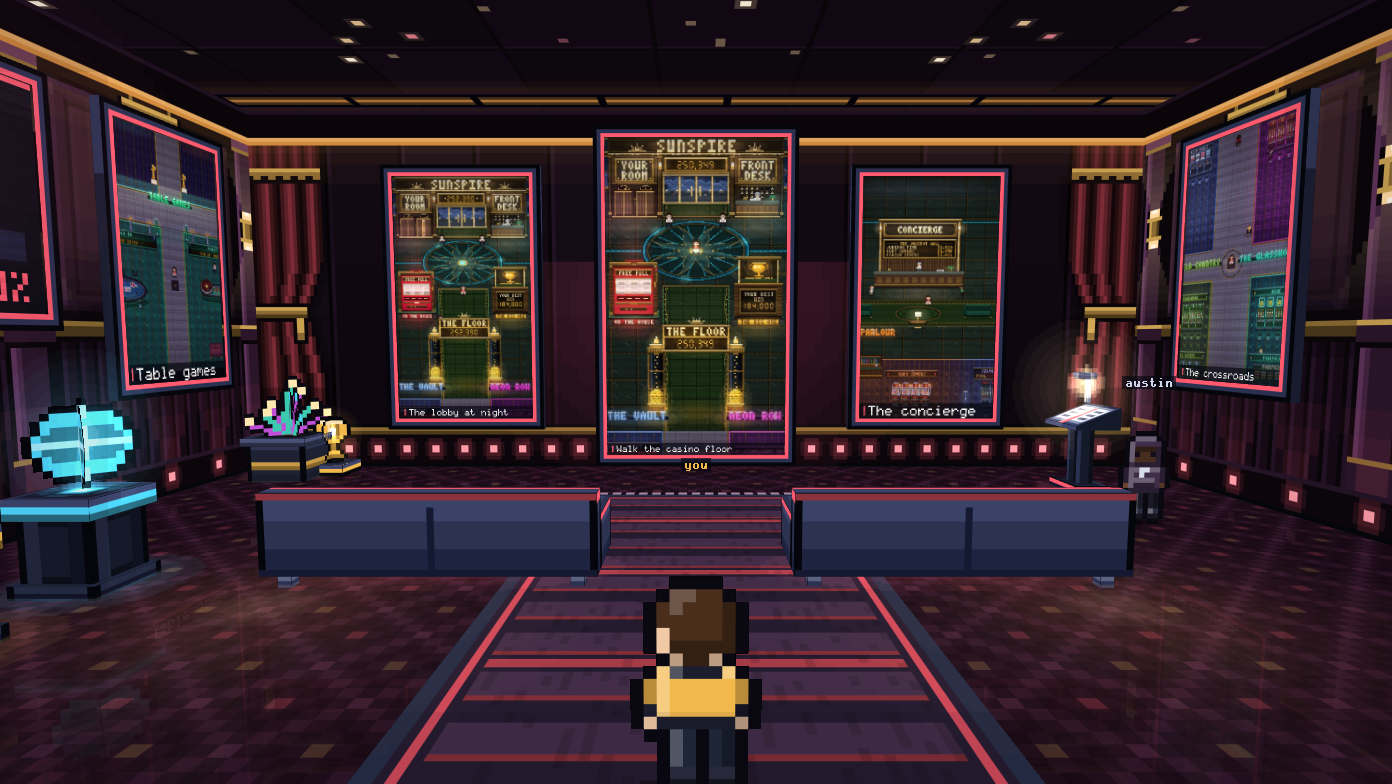
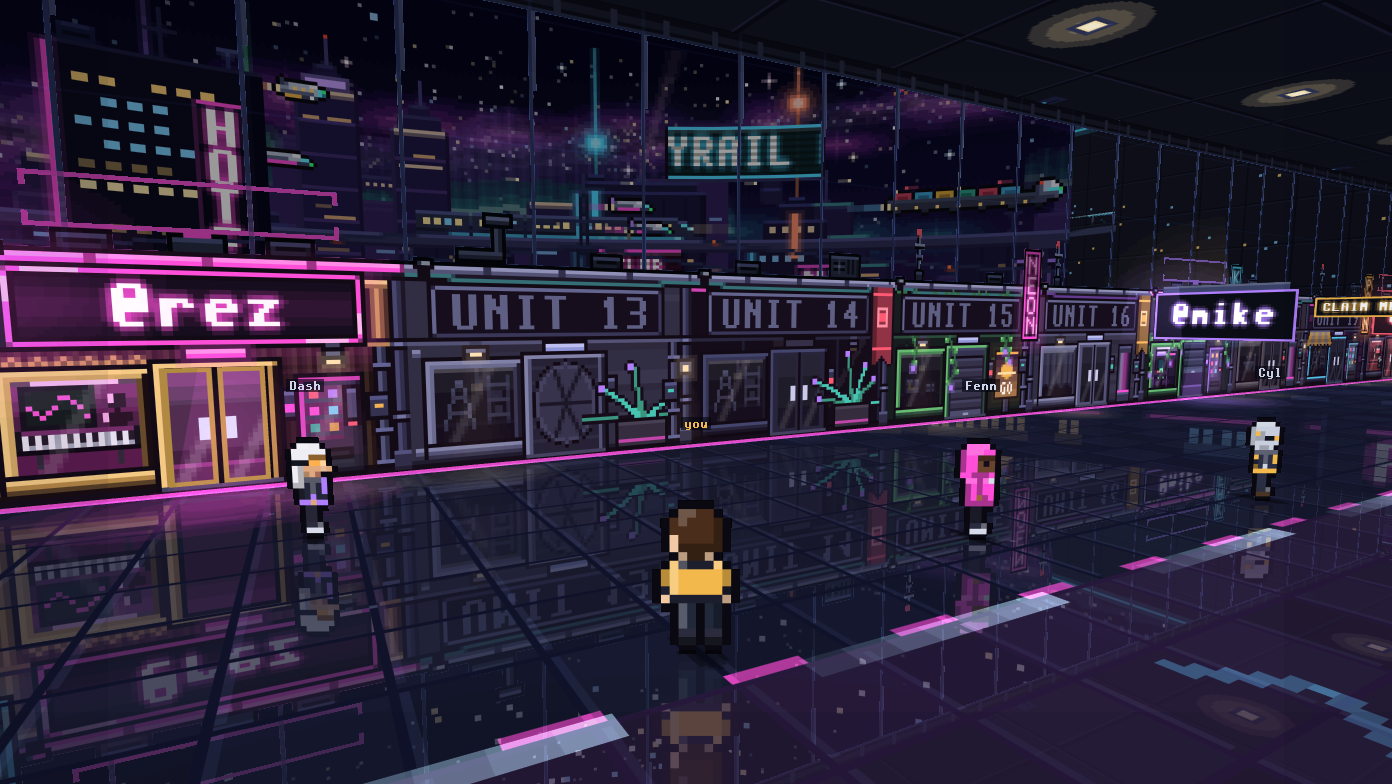
What is in this build
Outside the glass
A banded gas giant with storm ovals, tilted rings and two orbiting moons, drifting nebulae, meteors, a comet, an aurora. A far city of spires, domes, cranes, a stadium and arcologies; a mid city with searchlights, sky bridges, scrolling billboards and a skyrail with a station; a near highway with car lights both ways and two landing pads. Shuttles, couriers, freighters and police drones at three depths, a capital ship every few minutes, a dropship that lands, and the odd ion storm.
On the deck
Eight facade materials, three door types, awnings, banners, vertical neon, cables and vents, a lamp and light pool per unit. A floor material per wing. Two atria with a holo globe, the holo tree, lifts to Deck 2, three food stalls and a noodle bar. Two docks with a landing shuttle, luggage drones, a live departures board and customs gates. Twelve claimed units with their own window scenes and marquees.
Now in 3D
The hall and the Hub are a real three.js space from the same pixel art: the facade strips are the walls with the glass above them left clear so the city shows through, the floor carries baked light pools under every lamp and door and a reflection of the neon, people are upright billboards with name tags drawn at a fixed size, doors slide open and spill their colour, every claimed unit hangs a blade sign you can read from the walk, and the Hub sits under a glass vault with trusses and the planet overhead. The outside is a seamless panorama of the living vista. No lights, no shadows, a couple of hundred draw calls, so it runs on a phone.
Life
Forty members in nine body types with coats, hoods, suits, androids, a maintenance bot, a cat and a kid. Four-frame walks, window shopping, pairs chatting in icon bubbles, shoppers who go in and out of doors, a noodle queue with a vendor, a busker, benches, patrol, delivery and ad drones, floor cleaners. An arrival cinematic and a photo mode.